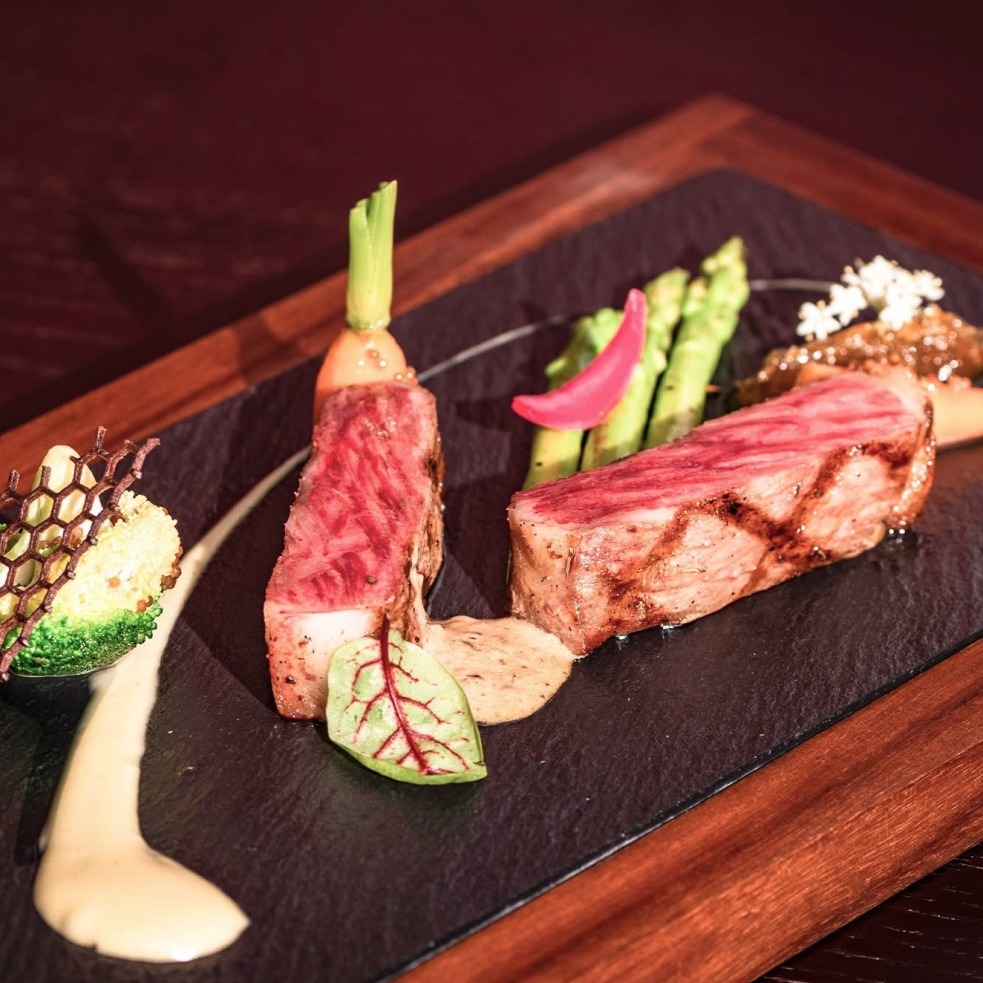
Continuing the journey of exploring the world of Wagyu with The Fan, this article will take you back in time, seeking the historical roots and unveiling secrets about the cattle breeds that created the legend of Japanese beef.

From Agricultural Draft Power to Culinary Masterpiece
Wagyu’s history doesn’t begin at lavish dining tables, but in the rice fields of Japan centuries ago. Genetic evidence suggests this cattle lineage may have separated 35,000 years ago. Cattle were introduced to Japan from Asia around the 5th century BCE, and for many centuries, they were primarily raised for draft power in agriculture. Due to Buddhist influences and regulations, consumption of four-legged animals was strictly limited until the Meiji Restoration in 1868.
This centuries-long process of selecting cattle based on endurance inadvertently created conditions for the development of intramuscular fat accumulation (marbling) – an efficient energy reserve. When the meat consumption ban was lifted and Emperor Meiji publicly enjoyed beef in 1872, demand for beef soared. The crossbreeding period with European cattle breeds (like Brown Swiss, Shorthorn, Angus) was brief (about 1868-1910) before the Japanese government recognized the risk of losing the precious marbling trait and decided to focus on stabilizing and improving the crossbred native cattle lines. The result was the birth of the four modern Wagyu breeds.
The Four Pillars of the Wagyu Empire
At The Fan, we believe diversity creates richness. Japan’s four main Wagyu breeds are testament to this:

Japanese Black (Kuroge Washu):
The “champion” comprising 90-97% of the total herd. Famous for its ability to create the densest, most refined marble-like fat, delivering melt-in-the-mouth tenderness and rich, flavorful taste. Most renowned brands like Kobe, Matsusaka, Ohmi belong to this breed. This breed is further divided into main bloodlines (strains) with distinct characteristics:
- Tajima (Hyogo): “Expert” in marbling, small frame, slow growth. Foundation of Kobe Beef.
- Kedaka (Tottori): Larger frame, good growth, healthy, good marbling but possibly less refined than Tajima.
- Fujiyoshi (Shimane/Okayama): Balance between size, growth and meat/marbling quality.
Japanese Brown (Akage Washu / Akaushi):
The second most common, primarily in Kumamoto, Kochi. Significantly leaner meat (fat <12%), milder flavor, less fatty but still rich in meat sweetness. Fast growth, healthy.
Japanese Shorthorn (Nihon Tankaku Washu):
Rare (<1% of total herd), mainly in northern areas (Iwate, Aomori, Hokkaido). Often grass-fed, free-range. Very lean meat, low marbling but rich in amino acids, creating a distinctive rich umami (meat sweetness).
Japanese Polled (Mukaku Washu):
Extremely rare (few hundred head), mainly in Yamaguchi. Result of crossbreeding Japanese black, brown and Scottish Angus. Meat characteristics little known due to limited numbers.
This diversity shows that Wagyu doesn’t have just one flavor. From the premium marbling of Kuroge to the umami of Tankaku, each breed offers a unique experience. In the next article, The Fan will decode the complex grading system and explore the renowned Wagyu brands that have positioned this beef at the top of the world culinary map.